The chemistry of transparency
Humans have been making glass for over four thousand years. Over that time, it has gone from being a rare object to an indispensable part of the modern world. Windows, bottles, lenses, screens and optical fibres all have one thing in common: a material whose evolution continues to be driven by chemistry.

Glass is the result of a precise combination of chemical elements and carefully controlled processes. The balance between these elements determines its characteristics and allows it to be adapted to uses as diverse as a bottle, a windscreen, a smartphone or a telescope.
Transparency, colour, heat resistance, durability, protection against radiation, and the ability to conduct light all depend on the chemical composition and how that composition is controlled during production.
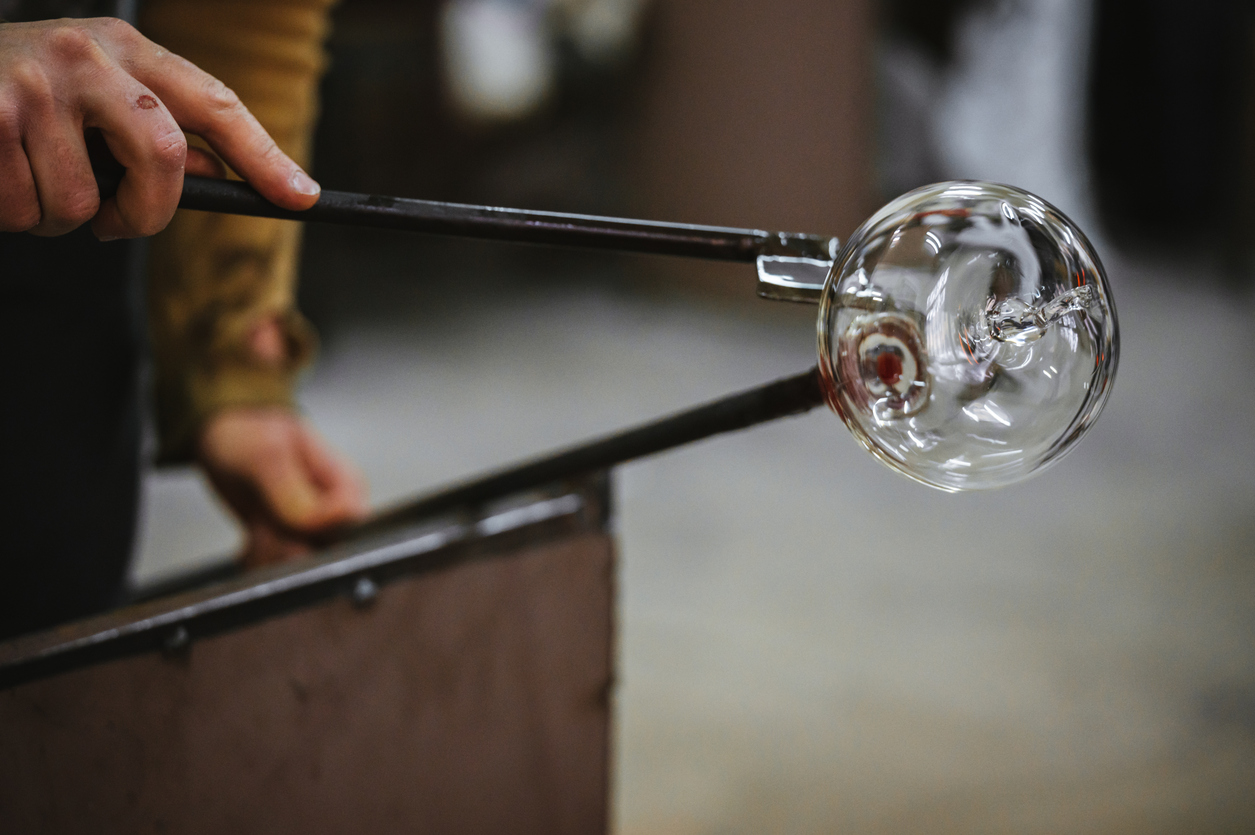
The main raw material for glass is silica (silicon dioxide), a compound found naturally in quartz-rich sand. When it cools rapidly after being melted, it forms an amorphous, rigid and transparent structure. However, this characteristic poses an industrial challenge: silica melts only at very high temperatures, close to 1700 °C.
To make the process viable, the industry uses chemical compounds that modify the behaviour of silica. By adding sodium carbonate, the temperature required for melting is significantly reduced, making the process more efficient. However, this solution creates a weakness, as it makes the glass more vulnerable to the effects of water. To counteract this effect, limestone is added, which increases the stability and strength of the final product.
The most common type of glass, found in most of the windows, bottles and jars we use every day, is known as soda-lime glass and is produced precisely by combining silica, sodium carbonate and limestone.

Small changes that make all the difference
The versatility of glass begins when its composition is adjusted to fulfil specific functions.
For example, adding boron oxide produces borosilicate glass, known for its low thermal expansion and high resistance to sudden temperature changes. This is why they are used in laboratory glassware, scientific equipment, specialised lighting and kitchenware. An ordinary glass may shatter when it comes into contact with a very hot liquid; borosilicate glass, however, is designed to withstand such thermal shock more effectively.
Chemistry also allows the colour of the glass to be controlled, as small quantities of certain compounds can alter the way the material absorbs and transmits light. Iron compounds can produce greenish hues, cobalt compounds produce intense blues, and selenium compounds can contribute to reddish tones.
But the ability to control how glass interacts with light goes far beyond colour. In buildings, the chemistry of glass has become a tool for energy efficiency. Very thin coatings, often based on metal oxides, can be applied to the surface of the glass to control the transfer of heat and solar radiation.
These are virtually invisible layers that help maintain the influx of natural light, whilst minimising heat loss during winter and reducing excessive heating caused by the sun in summer. In practice, glass ceases to be merely a barrier between the interior and exterior and becomes an active element in the energy performance of buildings.
In telecommunications, chemistry enables the production of glass of extraordinary purity. In an optical fibre, impurities that would go unnoticed in a window or a bottle can absorb or scatter light, compromising signal quality. By carefully controlling the chemical composition of the material, it is possible to create fibres capable of transmitting information over great distances, forming one of the foundations of the internet and modern communications.

Designed to last
Chemistry influences not only how glass is produced or used, but also what happens once its first useful life has ended.
Unlike many materials used in packaging, glass can be remelted repeatedly without losing the properties that make it useful. This characteristic allows the material to re-enter the production cycle time and time again, whilst maintaining high standards of quality.
The latest figures from the European ‘Close the Glass Loop’ platform indicate that around 81 per cent of glass packaging is collected for recycling, with several countries exceeding 90 per cent. According to FEVE, the European Federation of the Glass Packaging Industry, new packaging produced in Europe contains, on average, 53.5% recycled glass, with some cases reaching as high as 100%.
Glass cullet, as recycled glass used as a raw material, reduces the need to extract materials such as sand, limestone and sodium carbonate. According to FEVE, every tonne of recycled glass saves around 1.2 tonnes of virgin raw materials. As the material has already undergone a previous melting cycle, it also helps to reduce the energy required in production furnaces: every 10% increase in the use of recycled glass can result in a reduction of around 3% in energy consumption.
The history of glass began millennia ago, but its evolution is far from over. Thanks to advances in chemistry, this material continues to find new ways to improve our daily lives.