
What lies behind a pill?
A moment of headache, fever or discomfort. We take a pill almost without thinking, expecting quick relief. But behind this gesture lies a long chain of events, in which chemistry plays an essential role.

The relationship between chemistry and the pharmaceutical industry is so deep that, in practice, it is impossible to separate one from the other. Before a medicine exists, there is a molecule, or a set of molecules. And before it reaches a patient, there is a long journey of discovery, transformation, and control, in which chemistry plays a central role.
Chemistry enables us to identify, design and produce compounds with specific properties, capable of interacting with the human body predictably. This capability translates into the ability to relieve symptoms, treat diseases, and, in many cases, save lives.
Thus, a medicine is, at its core, a chemical structure. Its efficacy depends on how that structure interacts with biological targets, enzymes, receptors or cellular processes. Small variations in the composition or arrangement of atoms can completely alter a substance’s effect.
Chemistry is also present in other aspects of medicine. In addition to the active ingredient, there are excipients – substances with functions such as stabilising, preserving, facilitating release or, in some cases, improving the drug’s bioavailability. Added to this is the work of formulation, an area in which chemistry plays a part, which defines the route of administration and influences the medicine’s performance.
Another essential contribution of chemistry lies in the ability to develop and control processes that ensure consistency, purity and quality on an industrial scale.
At this stage, so-called chemical intermediates come into play. These are substances that do not have a direct therapeutic function, but are essential for producing the active ingredient. They function as stages in a process, each with strict requirements for control, purity and stability, which enable the pharmaceutical industry to develop safe, effective and accessible solutions.

How medicines are made
We find examples of this intrinsic link in industrial chains associated with widely used medicines. The production of paracetamol, one of the most widely used drugs worldwide for pain relief and fever reduction, may involve chemical chains that include compounds such as nitrobenzene, aniline and para-aminophenol, the latter being its direct precursor.
Paracetamol features on the World Health Organisation’s list of essential medicines and, in addition to its clinical relevance, also has a significant global presence. According to various industry studies, the global market for this drug is valued at around 11 billion dollars, with projected growth of around 5% per year over the next decade, reflecting consistent demand for one of the most widely used analgesics and antipyretics.
The same logic applies to other therapeutic areas. Aminosalicylates, known as 5-ASA, are used in the treatment of inflammatory bowel diseases, such as ulcerative colitis. In these cases, the aim is to control persistent inflammatory processes, reducing symptoms and preventing long-term complications.
There are industrial routes for the production of these compounds that include aniline derivatives, once again highlighting the continuity between basic chemistry and advanced therapeutics.
According to a study published in the scientific journal The Lancet Gastroenterology & Hepatology, it is estimated that nearly 6 million people worldwide live with inflammatory bowel diseases, illustrating the scale of the impact of these therapies.
But chemistry’s contribution to the pharmaceutical industry is not limited to these specific chains. Chlorine, for example, is present in many small-molecule drugs and can alter key properties of molecules, such as stability, lipophilicity (the ability to dissolve in fats or oily environments) and how they act in the body.
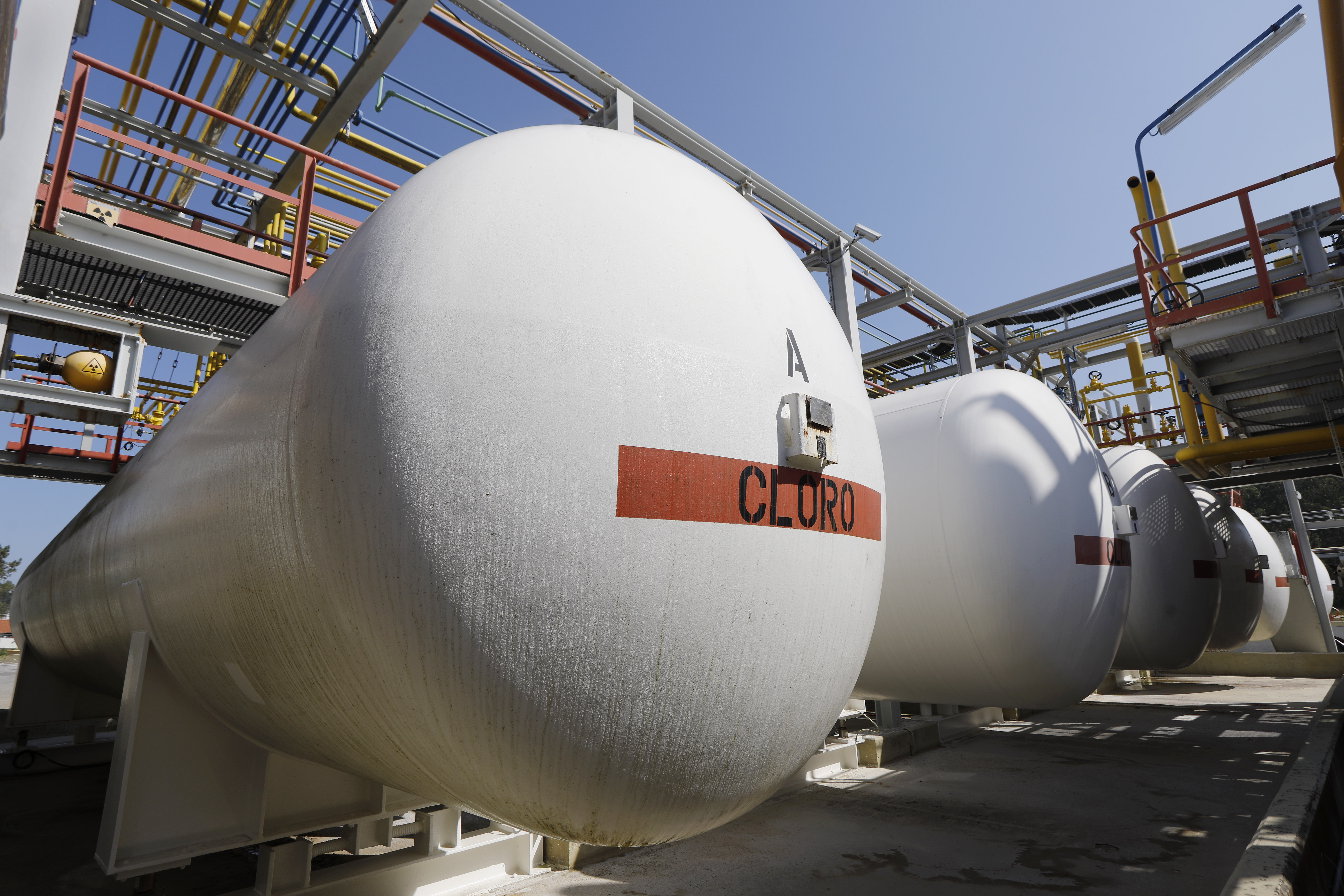
In addition to its direct presence in therapeutic molecules, chlorine and its derivatives are widely used as reagents and intermediates in synthesis stages, even when they do not form part of the final product. Its versatility makes it one of the key elements in the construction of complex substances, contributing to the efficiency and precision of chemical reactions.
According to chemical industry associations such as Euro Chlor and the American Chemistry Council, around 88% of the best-selling medicines rely on chlorine chemistry at some stage of their production process, even though this element is not necessarily present in the final product.
Without these intermediates, the pharmaceutical industry would not be able to operate at the scale and with the reliability we know today.
An essential role in the value chain
It is at this point that companies such as Bondalti play a key role. By producing compounds such as nitrobenzene and aniline, and elements such as chlorine, the company is involved in the early stages of the pharmaceutical value chain, supplying raw materials and important intermediates for industrial processes associated with the synthesis of active substances.
Beyond production, there is also a dimension of responsibility involved. The chemical industry operates today within a context of stringent regulatory requirements, where process safety, the traceability of substances and compliance with environmental standards are critical factors. These requirements are particularly relevant when products are intended, directly or indirectly, for applications in the healthcare sector.
The impact of this reality is felt directly in people’s lives. Advances in medicine have contributed to increasing average life expectancy, reducing mortality associated with various diseases and significantly improving quality of life in chronic conditions. According to the World Health Organisation, global average life expectancy increased by more than six years between 2000 and 2019, reflecting, among other factors, advances in access to healthcare and medicines.
Many of these achievements stem from the ability to understand and manipulate matter at the molecular level.
In this context, chemistry is a constant, discreet and essential presence, transforming knowledge into solutions that make a difference to the health of millions of people.