The invisible battle for food safety
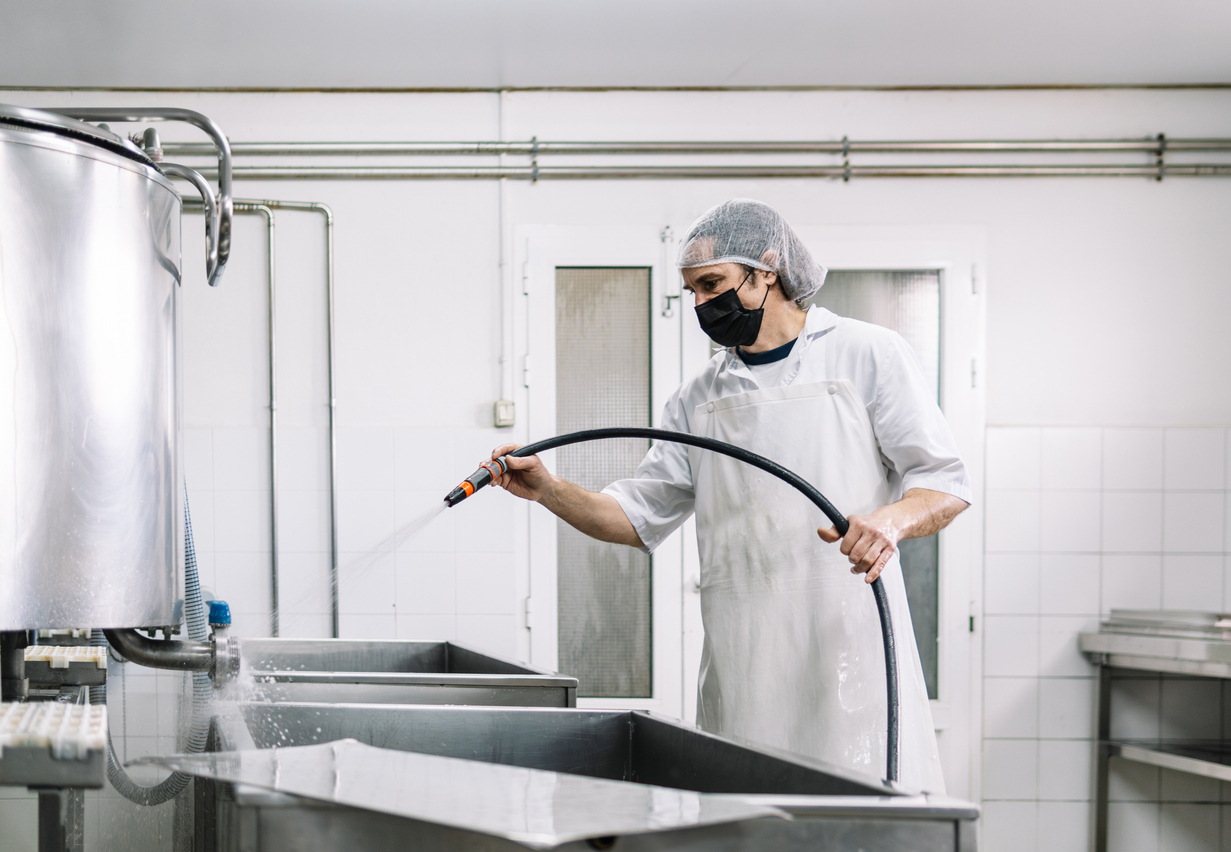
Before food reaches the consumer, one essential requirement must be met: everything that comes into contact with it must be properly cleaned and inspected. Equipment, pipework, tanks, work surfaces, and storage systems can become breeding grounds for residues and microorganisms if they are not subjected to rigorous sanitisation. Chemistry plays a central role in this invisible line of defence.

According to the World Health Organisation (WHO), around 860 million people fall ill every year due to the consumption of contaminated food, which corresponds to almost one in nine people worldwide.
The causes are varied, but many cases are linked to the presence of bacteria, viruses, parasites or contaminants that can enter the food chain during the production, processing, storage or transport of food. Ensuring food safety, therefore, requires much more than simply controlling the quality of the final products. It is necessary to ensure that the entire process takes place under appropriate hygiene conditions.
Cleaning is not the same as disinfecting
When discussing food hygiene, the terms ‘cleaning’ and ‘disinfection’ are often used interchangeably. However, they do not mean the same thing.
Cleaning aims to remove food residues, fats, proteins and other organic matter that accumulate on surfaces and equipment. Disinfection, on the other hand, seeks to reduce the presence of potentially hazardous microorganisms to levels considered safe.
This distinction is important because a surface may appear clean to the naked eye yet still harbour bacteria or other microorganisms. Similarly, the effectiveness of disinfection often depends on adequate prior cleaning to remove residues that could shield these organisms from the action of disinfectants.
In both cases, chemistry provides the substances and processes that enable action to be taken against the factors that promote food contamination.
Behind the scenes of sanitation
In food production facilities, the removal of residues requires the use of chemicals capable of acting on different types of dirt.
Alkaline solutions based on caustic soda (sodium hydroxide) are widely used to remove fats, proteins and other organic residues. Their chemical action breaks down or dissolves substances that would be difficult to remove by washing alone.
Acidic products, on the other hand, play a different role. Substances such as nitric acid or hydrochloric acid are used to remove mineral scale, limescale and other residues that can build up in pipework, tanks and industrial equipment.
Many of these operations are carried out using CIP (‘clean-in-place’) systems, which allow the interior of equipment to be cleaned without the need for dismantling. In these systems, cleaning solutions circulate in a controlled manner through the facilities, ensuring efficient sanitisation.
After cleaning, it is necessary to treat any microorganisms that may remain on surfaces or within the equipment.
Hypochlorite is one of the most commonly used compounds for this purpose. When dissolved in water, it generates compounds that attack proteins, enzymes and cell membranes. By disrupting the functioning of these structures, it hinders the survival and multiplication of microorganisms.

Rigour lies in the details
The effectiveness of these processes does not depend solely on the substances used. Concentration, temperature, contact time, rinsing and microbiological monitoring are equally important factors.
In practice, this means that the same substance can produce very different results depending on how it is used. This is why sanitisation processes follow rigorous protocols, designed to ensure effective cleaning and disinfection.
In Portugal, companies such as Bondalti form part of this food safety chain by producing substances such as caustic soda, hypochlorite, nitric acid and hydrochloric acid, which are used in cleaning, disinfection and industrial treatment processes.
Although rarely visible to the consumer, these solutions help ensure, on a daily basis, that food is produced under appropriate hygienic conditions and reaches the market meeting high safety standards.